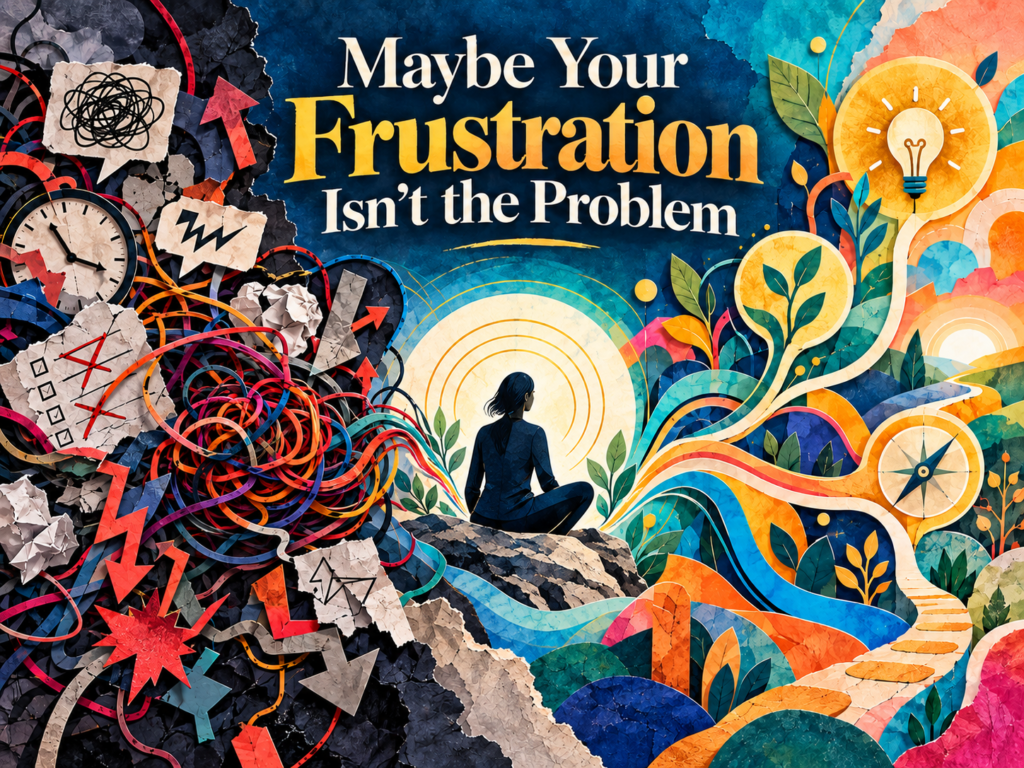
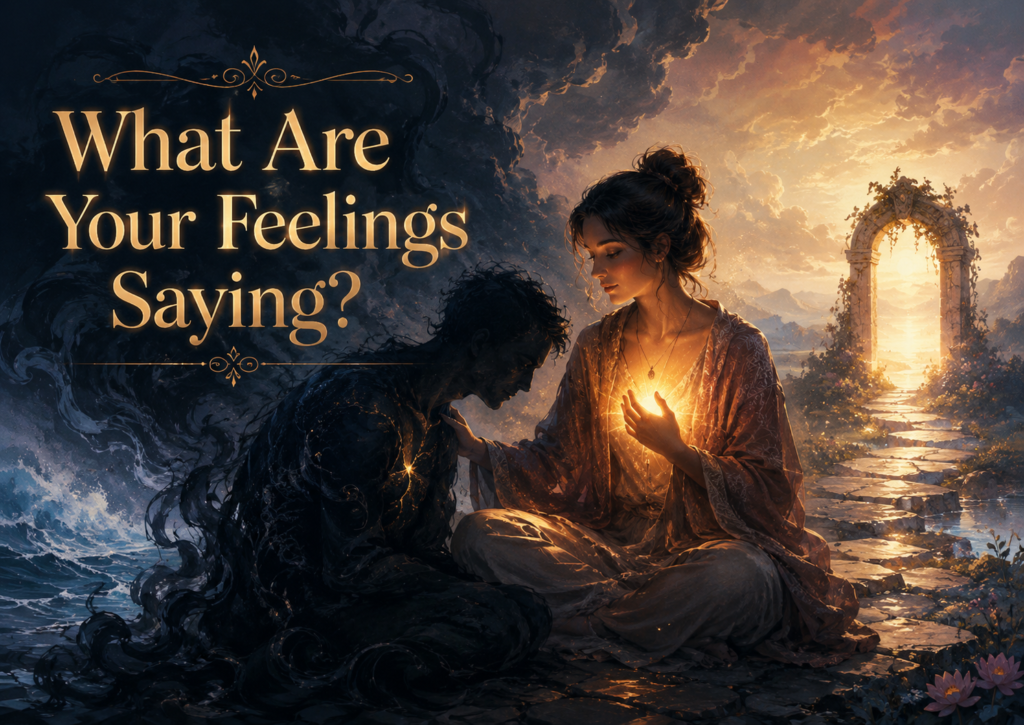
For years, one of the teachings I have received from Shaltazar that has affected me most deeply is this: our emotions are truth.
Not because every thought attached to an emotion is true. Not because every fear predicts the future or every angry reaction is justified. But because the feeling itself tells us that something within us is asking to be seen.
That sounds simple until one of the lower and slower emotions arrives: fear, anger, jealousy, shame, loneliness, grief, anxiety, resentment.
It is one thing to say, “I should listen to my feelings.” It is another to sit in the middle of a painful emotion and understand what it is actually trying to tell you.
I think this is where many of us get stuck. We either push the emotion away because we do not like how it feels, or become so immersed in it that we cannot see anything beyond it.
There is another way.
The Feeling Is True. The Story May Not Be.
Suppose I feel rejected.
The rejection I am feeling is real. Something has been activated inside me. But if my mind immediately concludes, “Nobody really wants me,” that does not make the story true.
If I feel afraid, the fear is real. But fear does not automatically mean something bad is about to happen.
If I feel angry, the anger is real. But anger does not automatically mean the other person is wrong.
The emotion is carrying information. The mind then rushes in and tries to explain what the information means, often using old beliefs, old wounds and old experiences.
So the first interpretation is not always the deepest truth.
Our work is not to distrust the emotion. It is to become curious about what lies underneath it.
Treat the Feeling Like Your Best Friend
Shaltazar has often taught me to accept emotions as I would accept a best friend and allow them to speak their truth.
I love that image because a true friend does not always tell us what we want to hear. Sometimes the person who loves us most says something uncomfortable. We may feel defensive at first, but because we trust the relationship, we are more willing to listen.
What if we began relating to difficult emotions in the same way?
Instead of saying, “I hate feeling this way. How do I get rid of it?” we might say, “I don’t like how you feel, but I am willing to listen. What are you trying to show me?”
Anger may be pointing toward a boundary we ignored. Jealousy may reveal a desire we have been unwilling to admit. Sadness may ask us to acknowledge a loss we minimized. Loneliness may show us how disconnected we have become from ourselves. Fear may reveal an old wound or a place where trust is still growing.
But these are possibilities, not definitions. There is no universal emotional dictionary. Each of us has to learn our own emotional language.
An emotion that is being resisted has to keep shouting.
An emotion that is being loved can begin to speak.

Acceptance Is Love
When Shaltazar speaks of acceptance, I have come to understand it as Love.
Acceptance does not mean I enjoy the feeling or approve of everything that created it. And it certainly does not mean I have to act on whatever impulse the emotion produces.
Acceptance simply says:
You are allowed to be here.
Many of us spend years trying not to feel certain emotions. I know this personally—I spent the first fifty years of my life learning how not to feel, moving through the world with emotions sealed away, believing that less feeling meant more control. But what I called strength was often just absence, a distancing from life itself. We tend to believe spiritually evolved people should not be jealous, strong people should not be afraid, loving people should not get angry, and positive people should not feel heavy.
So when those feelings arise, we judge ourselves before we have even listened.
But what if the feeling has not arrived because something is wrong?
What if it has arrived because something within us needs attention?
Love the feeling first. Understanding can come later.
Become the Observer
There is another part of this process that I believe is essential.
We cannot always understand an emotion while we are completely consumed by it.
If anger has taken over my awareness, I am not observing anger. I am anger. If fear is racing through every thought, I may not yet be able to distinguish the feeling from the story my mind is creating around it.
This is where becoming the observer matters.
Not detached in the sense of becoming cold or disconnected. More like stepping back lovingly enough to notice what is happening.
Instead of “I am angry,” I can begin to notice, “There is anger moving through me.”
Instead of “I am terrified,” perhaps, “Fear is here right now.”
That small change creates space. I am still honouring the feeling, but I am also remembering that the feeling is something I am experiencing, not the totality of who I am.
Sometimes the truth becomes visible only after the intensity has softened.
There are times when the most loving response is simply:
“I know you are here. I am willing to feel you. I don’t yet know what you are trying to tell me.”
Then return later.
What Truth Would You Miss?
I have started to think that many difficult emotions are not asking us to fix them at all.
They are asking us to see something: a need, a longing, a boundary, an old wound, a truth we have avoided, a part of ourselves we have abandoned, or a life that no longer feels aligned.
This changes the question.
Instead of asking, “How do I make this feeling go away?” we can ask:
“What are you trying to help me understand?”
And maybe an even more powerful question:
“What truth would I miss if I rushed to make this feeling go away?”
Activate the Wisdom
The Five Questions Beneath the Feeling
The next time a lower or slower emotion arises, do not try to solve your entire emotional world. Choose one feeling and begin there.
First, welcome it. You might quietly say: “I know you are here. I may not like how you feel, but I am willing to stop fighting you.”
When the initial intensity settles enough for you to observe the feeling, ask:
1. What am I actually feeling?
Try to go beneath “good” or “bad.” Is it fear, hurt, anger, disappointment, jealousy, shame, loneliness, grief, or something harder to name?
2. What may have triggered this feeling—either in this moment or from my past?
Notice what just happened and what it may have activated in your deeper history—an old wound, memory, or pattern being touched again.
3. What story did my mind immediately attach to this feeling?
“I am not enough.” “They do not respect me.” “Something bad will happen.” Notice the story without assuming it is true.
4. What might this emotion be trying to show me?
Is there a hurt, need, boundary, longing, fear, memory or truth asking for attention?
5. What is the deeper truth beneath my first reaction?
Do not force an answer. Sometimes the truth comes immediately. Sometimes it arrives hours or days later.
Finish by asking:
“What truth would I miss if I rushed to make this feeling go away?”
You do not need to become fluent in the language of your emotions overnight.
You are learning a relationship.
The more often you meet your feelings with Love rather than resistance, the more clearly you may begin to hear them.
And perhaps, over time, the emotions you once feared most will become some of your wisest teachers.
August 20, 2026