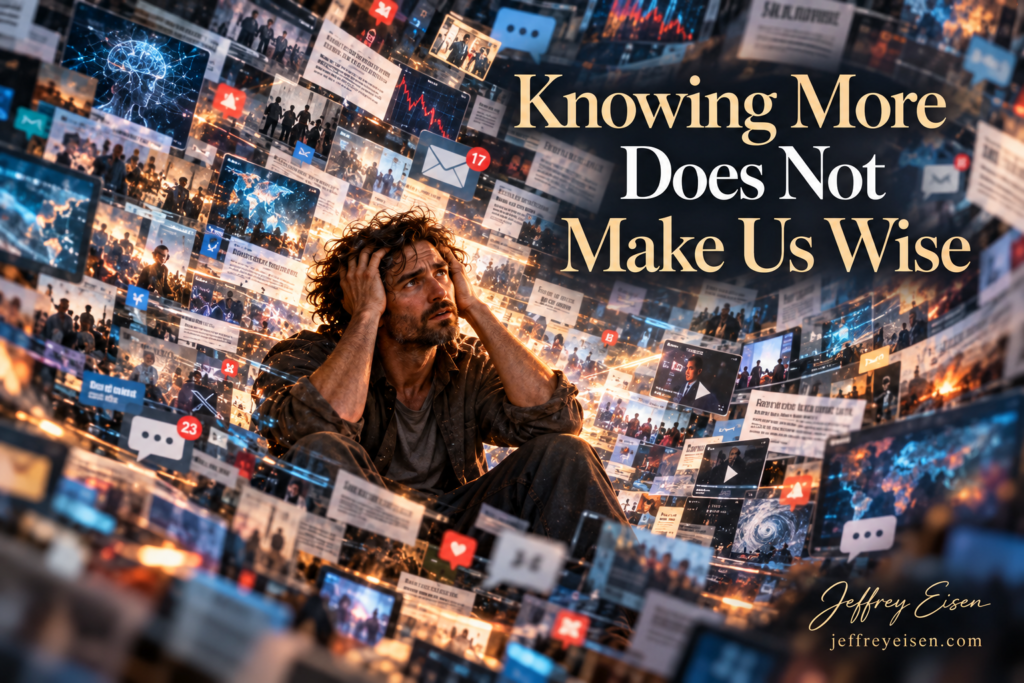
We are living in an age where information is no longer difficult to find. It is everywhere.
We can ask a question and within seconds receive answers from Google, AI, podcasts, social media, experts, coaches, friends and complete strangers. The problem is no longer a lack of information. We are receiving more of it than we know how to process.
And I am beginning to wonder whether one of the most important skills we can develop in this next stage of human evolution is not learning how to know more.
It is learning how to discern better.
Information and wisdom are not the same thing. We can know a great deal and still make unconscious choices. We can have access to brilliant teachers and still give away our power to decide for ourselves. We can ask AI to analyse every possibility and still have no idea what actually feels right for us.
The more answers we have available, the more important it becomes to develop the wisdom to know what to do with them.
The Space Where Discernment Begins
One of the things we seem to be losing in the speed of modern life is the pause between receiving information and deciding what to do with it.
We hear something and immediately believe it or reject it. We ask for advice and feel pressure to act on it. We receive an answer from AI and can easily mistake speed and confidence for wisdom.
But somewhere between receiving information and acting upon it, there needs to be space.
That space is where discernment lives.
Discernment asks us to become curious rather than reactive. What is actually being said? What evidence supports it? Why does this resonate with me? Am I responding because it feels true, or because it confirms what I already believe? Am I rejecting it because it is wrong, or because it makes me uncomfortable?
This kind of questioning is not cynicism. It is consciousness.
One of the great dangers of information overload is not simply that we become overwhelmed. It is that we gradually lose the habit of thinking deeply, questioning carefully, feeling inwardly and making conscious decisions for ourselves.
Advice Is Input
I was recently speaking with someone who had sought guidance from several different people before coming to me. Each had offered a perspective, and some contradicted one another.
What became clear was that none of us could make the final decision for him. We could offer insight, experience and possibilities, but ultimately all of that information had to pass through his own inner system.
Advice is input. It is not instruction.
A teacher, coach, friend or AI can expand our awareness, but when we stop questioning what we receive, we begin allowing something outside us to decide what is right for us.
The information and guidance we receive from outside ourselves should not replace the wisdom within us. Ideally, they help us see more clearly, consider what we may have missed and awaken that inner wisdom.
There May Not Be One Right Answer
Discernment also asks us to become more comfortable with the possibility that there may not always be one absolutely right decision.
From my spiritual understanding, absolute truth exists at a level far beyond normal human perception. Here, we experience life through perspective, conditioning, history, values, fears and different levels of awareness. Two thoughtful and sincere people can examine the same situation and make different choices without one of them necessarily being wrong.
Perhaps the more useful question is not: What is the right decision?
Perhaps it is: What is the most conscious and aligned decision I can make from where I am right now?
That question leaves room for uncertainty, growth and humility. It recognizes that we may learn something tomorrow that changes what we believe today.
Wisdom may not be about becoming absolutely certain. It may be about making conscious choices without requiring certainty.
Discernment, Self-Trust and Courage
It is one thing to discern what feels most conscious and aligned. It is another to trust ourselves enough to honour what we have discovered.
We may listen carefully and question deeply, yet still abandon our choice because someone disagrees, the crowd is moving another way, or we are afraid of getting it wrong.
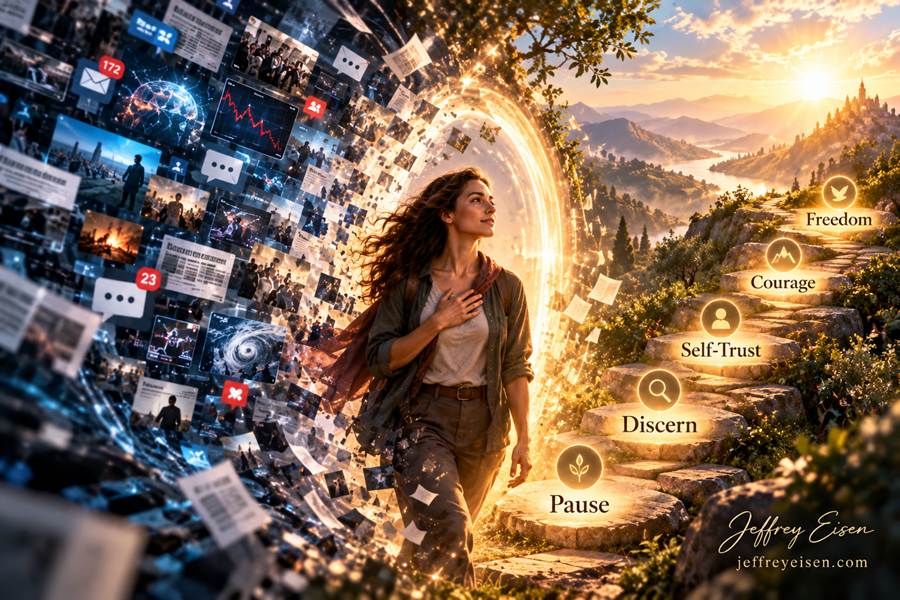
Discernment helps us see more clearly. Self-trust allows us to stand behind what we see. Courage enables us to act on it.
Self-trust does not mean believing we can never be wrong. It means being willing to say: I have listened. I have considered. I may change my mind. But this is the choice that feels most conscious for me right now.
That is not stubbornness. Stubbornness refuses to reconsider. Self-trust remains open.
Perhaps what we are really learning is confidence without rigidity.
I trust myself enough to choose. I remain humble enough to reconsider. I respect you enough to allow you to choose differently.
And that last part matters.
If I need you to agree with me before I can feel secure in my own decision, then I have not yet fully learned to trust myself. I may feel compelled to convince you or prove that I am right simply so I can feel safer in my own choice.
But when I become more secure within myself, I no longer need to control your perspective in order to trust my own.
That does not mean every idea is equally wise or that we abandon reason, evidence or consequences. It means we can allow disagreement without automatically turning it into conflict.
Discernment helps us sort through what we receive. Self-trust helps us honour the choice that emerges. Courage allows us to live that choice without certainty or approval. Together, they create greater freedom, and that freedom can lead to greater peace. From there, acceptance and harmony become more possible because we no longer require agreement in order to remain grounded in ourselves.
AI Makes Discernment More Important, Not Less
Artificial intelligence makes all of this even more important.
AI gives us access to an extraordinary amount of knowledge. It can help us compare perspectives, challenge assumptions and see possibilities we may have missed.
That is a remarkable opportunity. But the purpose of AI should not be to think instead of us. It should help us think more clearly.
No matter how sophisticated technology becomes, we still have to live with the choices we make. We still have to ask what aligns with our values, what feels true within us and what consequences we are willing to accept.
AI can expand the conversation. It should not replace the human responsibility to discern.
The Road Toward Inner Wisdom
We are unlikely to receive less information in the years ahead. We will probably receive much more. So our task may not be to escape the flood of information, but to develop the inner capacity to live wisely within it.
We receive information. We discern what feels meaningful, credible and aligned. We trust ourselves enough to choose. We find the courage to act. And as we become less dependent on outside approval, we experience greater freedom.
That freedom can lead somewhere deeper. When we become more peaceful within our own choices, we become less threatened by choices that are different from ours. We can listen without immediately defending, disagree without needing to condemn, and remain open to learning without abandoning ourselves.
Perhaps this is one small pathway toward greater human consciousness: not knowing everything, not being certain about everything, but learning how to meet life with greater awareness, self-trust, humility and freedom.
The future may belong not to those who know the most, but to those who can discern wisely, choose courageously and remain open enough to let others do the same.
Activate the Wisdom
The next time you feel overwhelmed by advice, opinions or information, do not rush to decide what you believe.
Pause and ask yourself: What do I actually know? What am I assuming? What am I afraid of? What feels most conscious and aligned for me right now?
Then notice what happens when an answer begins to emerge. Can you trust what you have discerned enough to make your own choice, even if someone else would choose differently?
You do not need absolute certainty or everyone’s approval. You simply need to choose as consciously as you can from where you are today, while remaining open enough to keep learning.
That is how discernment, self-trust and courage begin to work together.
And perhaps that is how inner wisdom gradually becomes freedom.
October 1, 2026